Hot Flushes in Menopause: When Your Inner Thermostat Starts Acting Brand New

Why the heat hits, what actually helps, and when it’s time to stop “just coping” and get proper support.
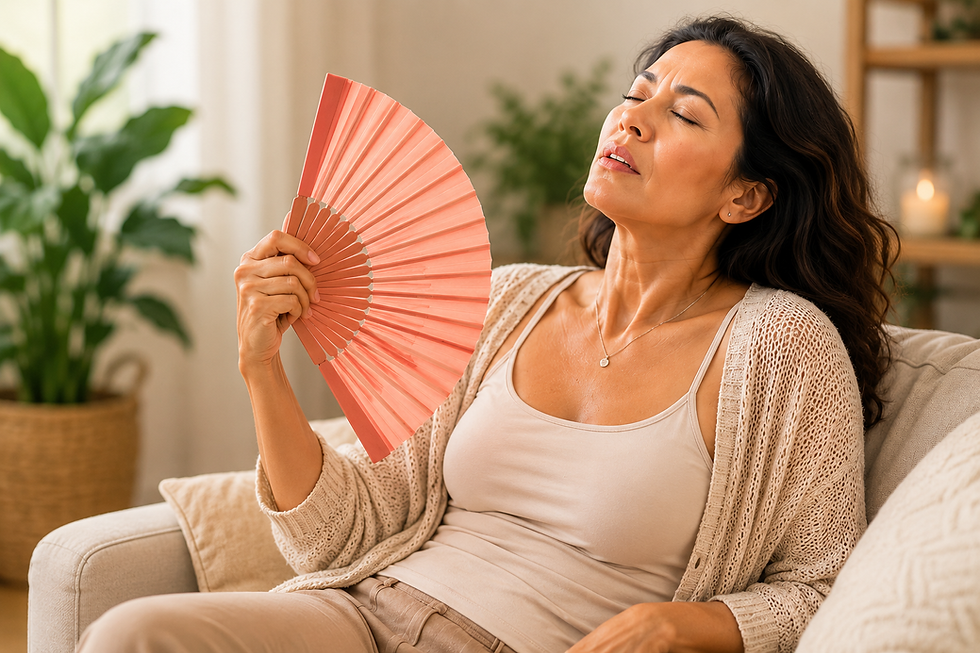
Hot flushes are one of the most common and frustrating symptoms of perimenopause and menopause. One minute you are fine. The next minute, your face is hot, your chest feels like someone opened an oven door, your heart may race, sweat appears from nowhere, and you are wondering whether you are melting or just trying to answer emails like a normal human being. The original draft correctly frames hot flushes as distressing episodes that can affect sleep, brain fog, anxiety, confidence and daily quality of life.
And let’s be clear: you are not being dramatic. Hot flushes are real. Night sweats are real. The emotional exhaustion that follows them is also real. This is not “just aging,” and it is not something women should be expected to quietly tolerate while still running homes, businesses, relationships, careers and entire emotional ecosystems.
This is where we stop shaming the symptom and start building a strategy.
What Are Hot Flushes?
A hot flush, also called a hot flash, is a sudden feeling of heat that often spreads through the upper body, face, neck and chest. It may come with sweating, skin redness, chills afterwards, a racing heartbeat, anxiety or a sense of discomfort. When this happens at night, it is often called a night sweat, and yes, it can absolutely ruin your sleep.
Hot flushes and night sweats are among the common menopause and perimenopause symptoms, alongside symptoms such as mood changes, anxiety, low mood and sleep problems.
Some women experience mild warmth. Others feel like their body has launched a surprise tropical weather event. The intensity, frequency and duration can vary widely. Some flushes last seconds. Others last several minutes. Some happen occasionally. Others arrive multiple times a day, because apparently the body did not consult your calendar first.
Why Do Hot Flushes Happen?
Hot flushes are strongly linked to hormonal changes during perimenopause and menopause, particularly changes in oestrogen. Oestrogen interacts with areas of the brain involved in temperature regulation. As hormone levels fluctuate and decline, the body can become more sensitive to small temperature changes.
In simple terms, your internal thermostat becomes a little over-alert.
Your brain may interpret a small temperature shift as overheating. In response, your body tries to cool you down by widening blood vessels near the skin and triggering sweating. That is why your face, neck and chest may feel hot or look flushed.
Hot flashes are a common vasomotor symptom of menopause and hormone therapy is usually approved as a first-line treatment for bothersome hot flashes.
So no, it is not “in your head.”It is in your body, your hormones, your nervous system and your temperature regulation system.
Very glamorous. Very inconvenient. Very manageable with the right support.

How Hot Flushes Can Affect Daily Life
Hot flushes are often treated like a minor inconvenience, but for many women they are anything but minor. They can affect:
1. Sleep
Night sweats can wake you repeatedly, leaving you tired, irritable and foggy the next day. Poor sleep can make almost every other symptom feel worse: mood swings, cravings, anxiety, concentration problems and low motivation.
2. Mood and Anxiety
A hot flush can feel physically uncomfortable, but it can also trigger embarrassment, panic or frustration. If you are constantly wondering, “Will this happen in the meeting? At dinner? During intimacy? At church? On the school run?” your nervous system stays on alert.
Mood swings, low mood and anxiety are common around menopause and perimenopause, and that rest, regular exercise, relaxing activities and CBT can help support mood and sleep.
3. Confidence and Social Life
Let’s be honest. Suddenly sweating through your blouse while trying to look composed is not exactly confidence-building. Some women start avoiding social events, public speaking, intimacy or work situations because they fear being visibly uncomfortable.
4. Work and Focus
Hot flushes can interrupt concentration, especially when paired with poor sleep or brain fog. You may feel less sharp, less patient or less like yourself. That does not mean you are losing your edge. It means your body is asking for support.
5. Relationships and Intimacy
When you are exhausted, overheated, anxious or embarrassed, intimacy can feel complicated. Add vaginal dryness, body changes, low libido or sleep deprivation into the mix, and suddenly the issue is not just “a hot flush.” It becomes a whole-life issue. And that is why managing hot flushes matters.
The First Step: Track the Pattern
Before you try to fix everything, start by understanding what is happening.
Most Menopause health practitioners recommend tracking hot flashes and identifying possible triggers such as spicy foods, alcohol, caffeine, stress or hot environments. It also is suggested to use practical cooling strategies such as cold water, layers and fans.
Try tracking for 7 days:
What time did the hot flush happen?
What were you doing?
What had you eaten or drunk?
Were you stressed, rushed, anxious or tired?
Did it happen after alcohol, caffeine, spicy food or a hot drink?
Did it happen at night?
How intense was it from 1 to 10?
What helped?
This is not about obsessing. It is about gathering clues.
At NNYou, we call this moving from symptom chaos to Symptom-to-Strategy™. Because once you see the pattern, you can stop guessing.
Practical Ways to Manage Hot Flushes
Lifestyle changes will not erase every hot flush for every woman. Let’s not pretend a linen shirt and a cucumber water will solve everything. But practical changes can reduce triggers, support your nervous system and make symptoms easier to manage.
1. Keep Your Body Cool
Start with the obvious but effective basics:
Wear light, breathable layers.
Keep a fan nearby.
Keep your bedroom cool at night.
Use lighter bedding.
Take a cool shower when needed.
Keep cold water nearby.
Avoid overheating during exercise or rushed mornings.
Light clothing, keeping the bedroom cool, using fans or cold drinks, reducing stress, avoiding common triggers and exercising regularly to help ease hot flushes and night sweats.
Sassy truth: your body is already running its own heatwave. Do not dress like you are helping it.
2. Identify Your Personal Triggers
Common triggers may include:
Caffeine
Alcohol
Spicy foods
Hot drinks
Smoking
Stress
Warm rooms
Heavy meals
Poor sleep
Rushing or over-scheduling
Not every woman has the same triggers. One woman’s coffee may be fine. Another woman’s coffee may turn her into a human kettle. The goal is not to become afraid of food, drinks or life. The goal is to notice what your body is saying.
3. Support Your Nervous System
Hot flushes are not only about temperature. Stress can worsen symptoms for many women. When your nervous system is already overloaded, your body may react more intensely.
Try this simple breathing reset:
The 4–6 Breath
Inhale through your nose for 4 counts.
Exhale slowly for 6 counts.
Repeat 5 to 10 times.
Drop your shoulders.
Unclench your jaw.
Remind your body: “We are safe.”
This will not magically delete menopause. But it can reduce the stress spiral around the flush. And sometimes, stopping the spiral is a win.
4. Eat to Stabilise, Not Punish
This is not the season for crash dieting, guilt eating or surviving on coffee and a prayer. Hot flushes can feel worse when your body is under-fuelled, dehydrated or riding a blood sugar rollercoaster. Focus on steady, supportive meals:
Protein at meals: eggs, fish, chicken, beans, lentils, Greek yoghurt, tofu or nuts.
Fibre-rich carbohydrates: oats, whole grains, vegetables, fruit and legumes.
Healthy fats: avocado, olive oil, nuts, seeds and oily fish.
Hydration: water, herbal teas or cooling drinks without too much sugar.
Gentle meal timing: avoid skipping meals if that leaves you shaky, irritable or craving sugar later.
Some women explore soy foods because they contain plant compounds called isoflavones. However, supplement claims around menopause are mixed, and “natural” does not automatically mean safe or effective. Many non-prescription approaches have limited evidence, and supplements may carry risks or interact with medication.
So yes, nourish yourself. No, do not throw every random supplement into your trolley because TikTok said so.
5. Move Your Body — But Don’t Punish It
Regular movement can support sleep, mood, metabolism, heart health and stress regulation. This includes regular exercise among lifestyle measures that may help ease menopause symptoms, including hot flushes and mood changes. Try:
A 10-minute walk after meals.
Gentle strength training 2–3 times per week.
Stretching before bed.
Low-impact cardio.
Yoga or mobility work.
Dancing in the kitchen because joy counts too.
This is not about shrinking yourself.This is about supporting your body through a transition.
Movement should feel like care, not punishment.

When Lifestyle Changes Are Not Enough
Here is where we tell the truth. Lifestyle support is powerful, but if your hot flushes are intense, frequent, ruining your sleep, affecting your work, worsening anxiety or reducing your quality of life, you deserve medical support too. You do not get a medal for suffering.
Hormone Therapy / HRT
Hormone therapy can be very effective for hot flushes and night sweats when it is appropriate for the individual. Hormone therapy is the normal first-line therapy for bothersome hot flashes and is shown to be the most effective treatment.
Oestrogen therapy works best for easing menopausal hot flashes, although it carries risks and should be considered with a healthcare professional, especially in relation to age, timing since menopause and personal medical history.
This does not mean every woman must take HRT. It means every woman deserves balanced, evidence-based information instead of fear, shame or vague advice.
Non-Hormonal Prescription Options
Some women cannot take hormone therapy or prefer not to. Non-hormonal prescription options may include certain antidepressants, anti-seizure medications and newer medicines, depending on country availability, medical history and clinician guidance. Antidepressants and anti-seizure medicines may help ease hot flashes, although they do not work as well as hormones for many women.
CBT and Psychological Support
CBT is not “just think positive and stop sweating.” Absolutely not. Menopause-specific CBT can help women manage the distress, sleep disruption, anxiety and behavioural patterns linked to symptoms. Menopause-specific CBT as a management option can help with hot flushes, sleep problems, low mood and anxiety. This matters because menopause is not only physical. It is also emotional, psychological and relational.
When Should You Speak to a Healthcare Professional?
Please speak to a doctor, nurse or qualified healthcare provider if:
Hot flushes or night sweats are affecting your sleep or daily life.
Symptoms are severe, sudden or unusual for you.
You are under 45 and experiencing menopause-type symptoms.
You have bleeding after menopause.
You have very heavy, irregular or concerning bleeding.
You have chest pain, fainting, unexplained weight loss, fever or persistent night sweats.
You are considering HRT, supplements or new medication.
You have a history of breast cancer, blood clots, stroke, heart disease, liver disease or other complex health conditions.
Speaking to a healthcare provider if you are under 45 and have signs of menopause such as irregular periods, hot flashes or vaginal dryness, as early or premature menopause needs proper assessment. Your symptoms deserve investigation, not dismissal.
The NNYou Symptom-to-Strategy™ Approach
At NNYou, we do not believe in telling women to “just cope.”
We believe in asking better questions:
What is your body trying to tell you?
What patterns are showing up?
What is your sleep doing?
What is your stress load?
What are you eating and drinking?
How is your mood?
What support do you need medically, emotionally and practically?
What small changes can we test this week?
This is not about perfection. It is about building a support plan that fits your actual life.
Because you do not need a lecture. You need a strategy.
Try This 7-Day Hot Flush Reset
For the next week, try this:
Morning
Drink water before coffee. Eat protein with breakfast. Dress in layers. Take three slow breaths before rushing into the day.
Midday
Notice your triggers. Did caffeine, stress, heat, skipping meals or spicy food play a role? Keep it observational, not judgemental.
Evening
Cool the bedroom. Reduce alcohol and heavy meals close to bedtime. Stretch for five minutes. Keep water nearby.
When a Flush Hits
Pause. Breathe. Sip cold water. Remove a layer. Use a fan. Remind yourself: “This is uncomfortable, but I am safe. It will pass.”
That last sentence matters. Because hot flushes can feel scary when they hit hard. Your body needs reassurance, not panic.
Final Thought: You Are Not “Just Hot”
Hot flushes are common, but common does not mean easy.
If they are disrupting your sleep, mood, confidence, relationships or work, they matter. If you feel embarrassed, exhausted or unlike yourself, that matters too.
Menopause is not a personality flaw. It is not weakness. It is not you “falling apart.”
It is a biological transition that deserves practical support, informed choices and a little less nonsense.
Your body is not being dramatic.Your thermostat is recalibrating.And yes, we can build a plan.
Tired of guessing what is triggering your hot flushes?
Let’s turn the heat, night sweats, sleep disruption and mood changes into a practical Symptom-to-Strategy™ plan.
Book a FREE Fit Call with NNYou and let’s look at what your body is saying, gently, clearly and without judgement.
Visit our website: www.nnyou.coach
WhatsApp: +27 67 578 4833
Instagram: @navnuryou
TikTok: @navnur.you
Because suffering in silence is not the strategy, lovely. Support is. 💛


Comments